Let’s be honest, if you’re reading this site you’re probably not a proponent of the Internet Ban. You might be believe in cautious usage and place heavy restrictions on what your children do on the ‘Net, but a ban fan you’re not.
Let’s take a second and give the other side the benefit of the doubt. I know it’s hard, but I think it is consistent with Torah principals. Let’s assume that the people who think a ban makes sense are intelligent, well meaning people, who dedicate a great part of their lives to getting closer to Hashem and helping others do the same. If we can accept that, then we would probably could assume that there are probably some good Torah-true reasons that a ban makes sense.
Read more Understanding the Internet Ban
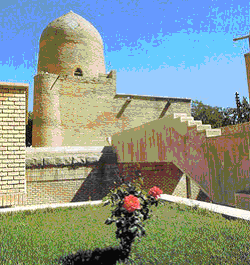 Today I was speaking with a business associate who mentioned that his father was born and raised in Hamadan, Iran also known as Shush or Shushan HaBira–the setting for the Purim drama. Hamadan is located between Teheran and Iran’s western border with Iraq. He mentioned that his father is very proud of his birthplace–Hamadan literally means “place of knowledge” and its inhabitants were generally regarded as very intelligent. Interestingly, Hamadan was the first Iranian province to allow Jews to own property. He also mentioned that Esther and Mordechai are the most popular names for Jews born in Hamadan and he himself has numerous relatives bearing these names.