 The Abuhav Synagogue in Tzefas, Israel is one of the most beautiful shuls I’ve been in. It is ornately painted and was constructed along the theme of the Pesach song Echad Mi Yodea (Who Knows One?) .
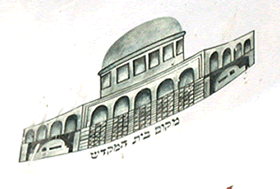
On top of the bima where the shaliach tzibur (prayer leader) stands is a dome, with many paintings upon it. Directly in the sight of the shaliach tzibur is a painting with the title “Makom HaMikdash” (the site of the Holy Temple). The weird thing is that the painting does not depict the Beis HaMikdash at all. Rather, it depicts the mosque that currently sits on top of the temple mount. The explanation is that when the shaliach tzibur looks up he sees that, because of senseless hatred among the Jews, in the place of the Beis HaMikdash now stands a mosque. This should serve to focus the shaliach tzibur, who represents the entire kehillah (congregation), on an all-encompassing love for all Jews.
Share the love.
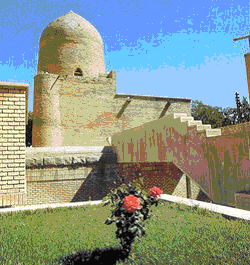 Today I was speaking with a business associate who mentioned that his father was born and raised in Hamadan, Iran also known as Shush or Shushan HaBira–the setting for the Purim drama. Hamadan is located between Teheran and Iran’s western border with Iraq. He mentioned that his father is very proud of his birthplace–Hamadan literally means “place of knowledge” and its inhabitants were generally regarded as very intelligent. Interestingly, Hamadan was the first Iranian province to allow Jews to own property. He also mentioned that Esther and Mordechai are the most popular names for Jews born in Hamadan and he himself has numerous relatives bearing these names.